





How to Write a Goal Statement That Works: 3 Simple Steps with Examples
Creating goal statements can get weirdly intense. You wouldn’t think writing a simple objective could trip so many people up — but it does. In fact, “How do we write this as a proper goal?” is one of the questions I hear the most when people are building KPI Trees.
You might be tempted to reach for SMART goals at this point, but… maybe hold fire on that. I'll explain why it's best to avoid SMART goals a little later but whether you’re sorting out your KPIs, shaping up a business strategy, or just planning what’s next in your career, writing clearly defined goal statements can make everything feel a lot more focused. This guide is here to help you do just that.
Why goal statements matter
There’s no one “perfect” way to write them, but there are plenty of ways to get it wrong. People often have strong opinions, especially when KPIs are involved. In fact, objective statements are a big part of building KPI Trees — so getting them right really matters. That’s where this guide comes in.
We’ll walk through how to write a goal statement that works in three quick steps, with simple goal statement examples and a few classic mistakes to avoid. Whether you're trying to set goals for your team or your personal and professional life, this guide has you covered. There’s even a mini FAQ at the end, in case you’re still scratching your head.
Total time to write an objective statement? About 10 minutes.
First up: What is a goal statement?
A goal statement is just a clear way of saying what success looks like. No fluff. No corporate waffle. Just: this is what we’re trying to achieve.
It’s not a to-do list or a plan of action. It’s the end result — the thing you want to be true once all the hard work is done.
You’re not saying, “We hope to...” or “We might...” You’re saying, “Here’s what we’ve nailed.” Like it’s already happened.
For instance, instead of writing, “We’re building a new warehouse,” a stronger objective statement would be, “Our products are shipped without delay.” Same ambition, but now it’s focused on the outcome — not the job list.
How to Write a Goal Statement in 3 Easy Steps (with Examples)
Let’s keep it simple. You don’t need fancy tools or hours of your life. Just three quick steps, a few illustrations, and a little bit of common sense.
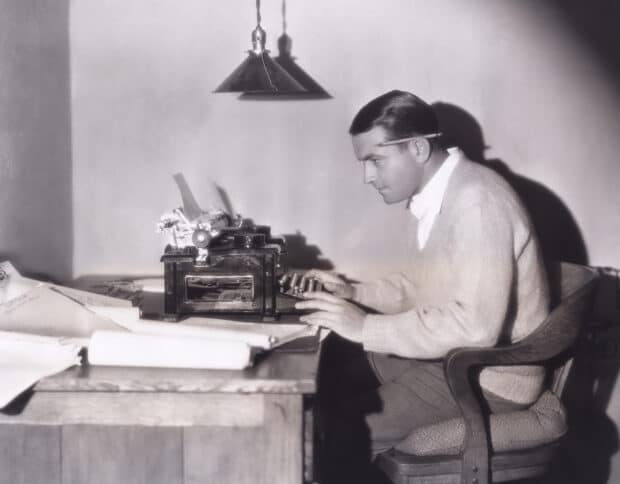
Typical time to write a goal statement: 10 minutes
Step 1
Brainstorm the end results (outcomes) you’re after
Grab whatever helps you think — a notepad, a whiteboard, sticky notes, Notion, or the back of a takeaway menu. Doesn’t matter.
Start jotting down all the outcomes you want. Not the jobs to be done, not the day-to-day tasks — just the results.
Here's an example:
👉 “Sign up for the Sawdust and Running Diet Plan”
That’s a task. Something to tick off.
👉 “Maintain a healthy body weight”
Now we’re talking. That’s the outcome that matters.

Step 2
Sort them by scale — then pick one to focus on
Some objectives from Step 1 will be big and broad. Others will be quite small and specific. That’s fine.
Now line them up from the widest, most strategic ones at the top, down to the smaller, more tactical ones at the bottom. The big-picture stuff gives you the best shot at meaningful impact, so that’s usually what you want to go with. You may have a specific reason to choose a lower level objective and that's fine as long as you're crystal clear on why.
Example:
You’re thinking about health and fitness, and you’ve jotted down:
👉 “We use comfortable running shoes”
Useful, but pretty narrow.
👉 “We have a long and healthy retirement”
Bingo. That’s got real scope. A much broader, more meaningful objective.
Step 3
Write it like it’s already happened
This is the magic bit.
Write your objective as if it’s already true. Like you’re living in a world where you’ve nailed it. This helps you focus on what success actually looks like — not just what you plan to do.
Stacey Barr calls this a 'future fact', which is a great term. (Here’s a link to her article, if you fancy a deeper dive.) I find it helpful to refer to it as 'tomorrow's truth'.
Quick tips:
Stick to results, not actions.
Leave out numbers and deadlines for now — that comes later.
Use pronouns like I, we, us, our — it makes things feel real and grounded and makes it easier to write about 'future fact'.
Example:
👉 “Build warehouse C17 by March”
That’s a project deadline—a task with a target delivery date. It doesn’t say why the warehouse matters or what good it’ll do.
Now try this instead:
👉 “Our products are shipped without delay”
That’s the actual win—the outcome. That’s the bit people care about.

Why goal wording matters
You wouldn’t think writing a simple objective could trip so many people up — but it does. In fact, “How do we write this as a proper goal?” is one of the questions I hear the most when people are building KPI Trees.
You might be tempted to reach for SMART goals at this point, but… maybe hold fire on that. I’ll explain why in the FAQ section below.
After running hundreds of goal-writing sessions, I’ve spotted three classic mistakes that pop up again and again. The good news? They’re easy to avoid once you know what to look for. Let’s walk through each one — and how to fix it.
3 Common Mistakes When Writing Goal Statements
Mistake 1: Writing goals that are just tasks in disguise
Let’s say I decide to go on a diet. The objective isn’t “Go on a diet.” That’s the action.
The actual objective is something like “Reach and maintain my ideal body weight.” That’s the result I want.
You can probably spot the difference, right? But loads of goal statements sneak in as simple to-do list items. They might sound fine at first glance, but they don’t actually tell us what success looks like.
Here are a few classic instances of activities masquerading as goal statements:
-
Build warehouse C17
-
All staff to complete Health & Safety Training 101
-
Sign up for the 'Sawdust and Running' diet plan
These are all actions — things we can do and tick off. But once they’re done, they don’t tell us what benefit we’ve achieved. That makes them a shaky foundation for your KPI design.
Let’s take the warehouse illustration. Once it’s built, so what? What do we get from it? Faster shipping? Less product damage? More room for stock? We need to spell that part out.
So, here’s the fix:
Create goal statements that talk about results, not tasks. What’s the outcome you’re actually hoping for? That’s what you want your goal statement to say.
✅ Good objectives focus on the difference you want to make, not the stuff you’re planning to do.
✅ You can still track tasks later if needed — they often live nicely in OKRs which are developed alongside KPIs. But they’re not the right starting point for KPIs.
Key points for Mistake 1: Tasked dressed up as goals
-
Tasks get ticked off and forgotten. Goals should describe a meaningful result that still matters after the work’s done.
-
A task tells you what you’re doing. A goal tells you why you’re doing it.
-
You can measure activity later down the line, but it’s not a solid substitute for measuring actual outcomes — so handle with care.

Mistake 2: Mashing activities together with targets and deadlines and calling them 'goals'
You’ll often see goals written like this:
-
Handover of new warehouse C17 by January 2024
-
Deliver H&S training to 100% of staff by month-end
-
Complete the 'Sawdust and Running' diet and lose 20kg
This type of goal follows a kind of “verb + subject + number + date” format. It’s tidy. It looks impressive. But it causes two big problems.
Problem one: targets make people twitchy.
Say you suggest an objective like “Increase profit by 10x.” You’ve now opened a can of worms. Some people will love the ambition. Others will panic. Instead of discussing whether “increasing profit” is a good objective (it probably is), everyone’s now arguing about the number.
Problem two: targets are a job for later.
We’re not ready for them yet. In most cases, you won’t know how you’re measuring something or what “great” looks like at this stage. So, setting numbers too early can throw you off course.
The better approach? First agree what good looks like in plain words — what you’re aiming for — and then come back later to set the targets. Fun fact: I developed a 7-step method for organisational KPIs where targets come into play in Step 5. Here's an overview of the ROKS Enterprise method with all 7 steps.
✅ Numbers invoke strong emotions. Save them for later — focus on results first
✅ Nail the goal statement, then worry about how to track it
Key points for Mistake 2: Goals tangled up with targets
-
Stick a target in too early and the conversation can go off the rails before it even starts.
-
When you’re just figuring out what to measure, it’s too soon to say how much or by when.
-
Start by writing clear, measurable goals. Save the target-setting for later — once you’ve got your bearings.
Mistake 3: Mixing the result and the task in one sentence
This one’s sneaky. It’s where a goal sounds result-y at first… but then quickly turns into a to-do list.
You’ll spot this format:
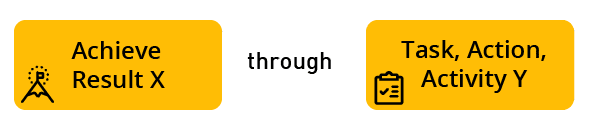
Verb + result + “by doing” + task
Here are a few illustrations:
-
Improve customer delivery times by building warehouse C17
-
Create a safe workplace through daily toolbox talks
-
Reach ideal weight by following the Sawdust and Running diet
See what’s happening? The sentence starts strong — we’re aiming for a result. But then the focus shifts straight to the task, which can throw off your measurements. Instead of asking “Have we improved delivery times?”, people start measuring whether the warehouse got built on time.
And there’s another problem...
If we tie the objective to a single action, we might miss other options that could help. Maybe daily toolbox talks aren’t the only way to improve safety. Maybe we need more than one fix. But the way the objective is written limits our thinking.
Here’s the fix:
Keep your goal focused on the outcome. If there are actions that support it, that’s great — but let those sit underneath, not inside, your goal statement.
✅ Keep the goal clean: just the result, nothing else
✅ Let your KPI measure the outcome, not how you got there
✅ Actions come later, and there may be more than one
Key points for Mistake 3: Goal + task all in one
-
Mixing the outcome with the action makes it easy to measure the task… and forget the actual result.
-
It can also box you in — you might miss other (better) ways to hit your goal because you’ve already baked one method into the wording.
-
Keep the goal about the outcome only. Let your actions and to-dos support it from the sidelines.

Seal your reputation as a KPI Pro
Online KPI Black Belt Programme

How to Fix These Common Mistakes
There’s a simple trick to dodge most goal statement slip-ups: write your objective as if it’s already happened. Like it’s true tomorrow. Some people call this a future fact (once again, credit to Stacey Barr for that snappy phrase).
Let’s go back to our earlier examples:
-
Build warehouse C17
-
All staff to complete Health & Safety training 101
-
Sign up for the ‘saw-dust and running’ diet plan
Now, if we flip them into future facts, we get:
-
We offer timely delivery to our customers
-
We have a safe working environment
-
I maintain a good body weight
Better! These sound more like results. But we’re not quite done yet...
Beware the woolly words 🐑

Woolly words are the kind that sound impressive, but when you try to measure them... good luck. They’re vague, fluffy, and impossible to pin down.
You’ve definitely seen them before — usually in glossy brochures or mission statements. Words like:
-
Fabulous
-
Best-in-class
-
Synergistic
-
Cutting-edge
-
Brilliant
-
Inspiring
They might make you as the reader feel great inside, but they don’t help much when you're trying to figure out if something actually worked.
Even in our updated examples, we’ve still got a few sneaky woolly words hanging around:
-
Timely
-
Safe
-
Good
Not awful, but also not clear enough to measure without a long debate. So let’s clean them up. And if you still need persuasion that wording counts, check out this 'wording horror story' regarding the Cobra Effect!
3 Great Goal Statement Examples (Finally)
Here’s what those same three goal statements look like with the fluff removed:
-
Our products are shipped without delay
-
Our team go home safely each day
-
We maintain a healthy body weight
Much better. You can picture what these mean, and they’re clear enough to measure (or at least discuss without losing the will to live).
The trick? Describe the result you actually want, as if it’s already true — no fluff, no buzzwords, no vague promises. Just a nice, solid picture of success.
Put It Into Practice
That’s it! Follow the 3 simple steps, steer clear of the common mistakes, and you’ll be knocking out solid goal statements in no time.
Not only will your goals be ready for KPI Trees, they’ll also be way more useful when it comes to setting actions, tracking your progress and actually getting stuff done.
Scroll on for a few quick FAQs — and if you’re hungry for more, take a wander through the Made to Measure KPIs resources for loads of practical advice on all things KPI-related.